For mid-sized UK investment firms managing heightened regulatory scrutiny from the Financial Conduct Authority (FCA) and the Prudential Regulation Authority (PRA), selecting an operating model is a strict financial and operational calculation. Compliance Consultant helps investment managers, alternative fund operators, and corporate finance boutiques replace fragile internal structures with resilient governance frameworks. A hybrid retainer model—combining internal oversight with structured external advisory retainers and professional-grade toolkits—consistently delivers continuous audit readiness at a fraction of the cost of expanding internal headcount. This guide evaluates fully in-house staffing, ad hoc hourly consulting, and tiered retainers across total expenditure, operational risk, and long-term regulatory defensibility in 2026.
The baseline cost of in-house compliance resourcing
Hiring a full-time compliance professional represents one of the steepest fixed overheads for any UK investment business. In the current market, a competent compliance manager commands a baseline annual salary of at least £60,000 outside London. For firms operating in the City or Mayfair, market rates sit 20% to 40% higher, pushing base remuneration into the £72,000 to £84,000 bracket before benefits.
Base salary is merely the starting point. When evaluating the true operational cost of an in-house appointment, leadership teams must factor in mandatory employer contributions and operational overheads:
- Employer National Insurance contributions (NIC) at current statutory rates
- Employer pension scheme obligations and private medical coverage
- Recruitment placement fees, which typically run between 20% and 25% of first-year salary
- Software licensing for compliance management systems, workstation equipment, and data access
- Ongoing professional development, technical reference libraries, and examination fees
Factoring in these overheads pushes the true first-year cost of a single mid-level compliance hire beyond £90,000. In our analysis of growing financial firms, building an internal function also introduces a dangerous single-point-of-failure risk. If a sole compliance officer falls ill, takes extended parental leave, or resigns to join a competitor, the firm loses its entire regulatory capacity overnight. Policies stall, monthly monitoring programmes fall behind, and upcoming regulatory filings face severe delays.
Firms that replace or augment this vulnerable structure using external retainers can save over £84,000 per year compared to expanding dedicated in-house headcount. A full breakdown of these figures appears in our detailed analysis on the true cost of UK financial services compliance in 2026: a benchmarking analysis.
Comparing compliance management models
Selecting the right compliance operating framework requires balancing budgetary certainty against execution speed and technical scope. Mid-sized firms generally weigh three primary structures.
| Dimension | Fully In-House Team | Traditional Hourly Consulting | Structured Tiered Retainer |
|---|---|---|---|
| Annual Cost Baseline | High (£90,000+ per headcount fully loaded) | Variable (unpredictable spend; £350–£600+/hour) | Controlled (£5,340 to £16,140/year inc VAT) |
| Response SLA | Immediate during working hours; zero cover on leave | Subject to consultant availability (often 2–5 days) | Contractual guarantee (4 hours for Gold; 1 business day for Silver) |
| Single-Point Failure | Severe risk; firm stalls if employee departs | Low risk; firm depends on an agency bench | Zero risk; multi-specialist institutional continuity |
| Toolkit & Templates | Must be built from scratch internally | Charged at bespoke project rates | Included (worth up to £3,638 in digital templates) |
| Regulatory Scope | Limited to the specific individual's past background | Broad, but meter runs on every novel query | Multi-sector panel covering FCA, PRA, and SMCR |
For an in-depth breakdown of how these delivery structures compare across different firm sizes, review our guide on comparing UK FCA compliance outsourcing models for mid-sized firms.

Fully in-house teams
An internal compliance manager provides immediate proximity to daily trading and portfolio decisions. They sit in executive committee meetings and develop an intuitive sense of the firm's commercial culture.
However, internal staff often struggle with technical breadth. A compliance manager with deep experience in Anti-Money Laundering (AML) transaction monitoring may lack the specialized expertise to build an Internal Capital Adequacy and Risk Assessment (ICARA) framework under the Investment Firms Prudential Regime (IFPR), or to draft complex Fair Value assessments under the Consumer Duty. When unique regulatory issues arise, internal staff frequently require outside counsel anyway, doubling the firm's total compliance expenditure.
Traditional consulting hourly billing
Mid-sized firms often turn to traditional City consultancies to cover technical blind spots. While these firms offer qualified personnel, open-ended hourly billing structures misalign commercial incentives.
At rates ranging from £350 to well over £600 per hour, routine tasks such as financial promotions sign-offs, regulatory horizon tracking, and policy updates quickly generate unpredictable monthly invoices. Boards find it difficult to forecast operational expenditure, which often leads internal teams to ration their compliance queries to control costs. Delaying advice on complex transactions to save on hourly fees frequently results in expensive remediation later.
Structured tiered retainers
Structured retainers bridge the divide between fixed overheads and unpredictable hourly invoices. By contracting for a defined scope of advisory support, regular reviews, and professional toolkits, firms gain institutional expertise with complete cost transparency.
Compliance Consultant structures its support across three distinct tiers to match different stages of operational complexity:
- Bronze Retainer (£5,340 per year inc VAT): Designed for firms seeking essential oversight tools. Includes Lite versions of the Compliance Risk Register with Heat Mapping and the Regulatory Horizon Scanning Tracker.
- Silver Retainer (£895 per month quarterly, or £795 per month billed annually at £9,540 per year inc VAT): Suited for established firms wanting proactive management. Delivers 8 hours of monthly advisory support, a 1-business-day response SLA, monthly regulatory briefings, quarterly review meetings, an annual Compliance Monitoring Programme review, and £1,194 worth of standalone digital frameworks, delivering £3,969 per month in stated value.
- Gold Retainer (£1,495 per month quarterly, or £1,345 per month billed annually at £16,140 per year inc VAT): Built for firms needing a dedicated partner with board-level execution. Delivers 16 hours of advisory support, a 4-hour response guarantee, a dedicated named consultant, monthly strategic and MI reviews, drafted quarterly board reports, FCA supervisory visit preparation, and £3,638 in specialist toolkits, representing £10,956 per month in stated value.
Even our most comprehensive Gold retainer costs less than 17% of employing an entry-level compliance manager, removing recruitment fees and single-point-of-failure exposure while providing direct access to senior practitioners.
Required infrastructure for audit readiness
Regulatory scrutiny on mid-sized firms has intensified. The FCA business model review findings on smaller asset managers and alternative firms evaluated over 400 regulated entities, identifying significant deficiencies in high-risk investment categorisations, conflict management where directors hold multiple roles, and weak application of customer-centric frameworks.
Maintaining continuous audit readiness requires distinct, documented systems rather than informal intentions.
Horizon scanning and risk registers
The regulator expects firms to demonstrate proactive awareness of rule changes rather than reacting after supervisory notices arrive. A compliant infrastructure requires an active Regulatory Horizon Scanning Tracker to log upcoming FCA policy statements, PRA guidance, and statutory changes, mapping each item directly to the firm's operational workflows.
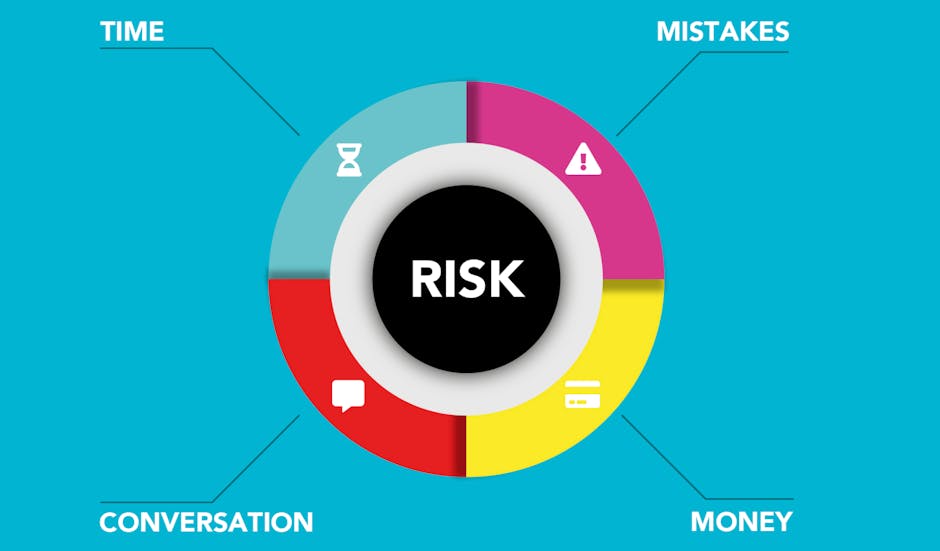
Alongside horizon scanning, firms must maintain an active Compliance Risk Register with Heat Mapping. This document records identified conduct, operational, and prudential risks, grades them by impact and probability, and assigns clear mitigation actions to specific operational owners. When FCA supervisors review a firm, a static risk register compiled eighteen months prior signals weak governance.
Senior Managers and Certification Regime (SMCR) mapping
Under the Senior Managers and Certification Regime, senior leaders face direct personal regulatory accountability for deficiencies within their areas of responsibility. Mid-sized firms must maintain unambiguous documentation showing how duties are divided.
Using a standardized SMCR Responsibilities Mapping Playbook, firms must document Management Responsibilities Maps, Statement of Responsibilities (SoR) forms, and formal handover procedures. Furthermore, when staff conduct falls short of regulatory standards, firms must use a structured Conduct Rules Breach Investigation Toolkit to run fair, methodical investigations, document disciplinary outcomes, and meet strict regulatory notification deadlines.
Consumer Duty and operational resilience
The implementation of the FCA Consumer Duty represents a permanent shift toward evidence-based customer outcomes. Investment firms can no longer claim compliance simply because they have received few complaints. Supervisors demand proof that products offer fair value, clear communications, and adequate support across the customer lifecycle.
Firms require an operational Fair Value Assessment Framework to evaluate fee structures against tangible client benefits, paired with robust root-cause analysis tools to identify systemic product failures. Where firms operate client-facing digital interfaces, workflows must be inspected to eliminate friction points that trap users or obscure costs. For a practical approach to cleaning customer journeys, see our guide on how to audit and remove digital sludge for FCA Consumer Duty.
Implementing process change without operational disruption
Upgrading a compliance framework often triggers internal resistance. Trading desks, portfolio managers, and operations staff may view revised sign-off procedures and monitoring checklists as administrative drag that slows business momentum.
To avoid operational disruption, Compliance Consultant applies an established four-stage philosophy across all client engagements:
- Demonstrating return on investment before implementation: Show commercial leadership how updated controls protect transaction velocity, lower operational losses, and prevent costly remediation before rewriting existing policies.
- Applying the engage, execute, embed methodology:
- Engage: Establish regulatory requirements and governance priorities before building new operational infrastructure.
- Execute: Drive process and organisational changes in parallel with technology adjustments and documentation rollouts.
- Embed: Integrate compliance into daily operations through disciplined live testing, objective sampling, and structured scaling.
- Piloting in sample departments: Test new monitoring tools, customer categorisation checks, or AML verification procedures within a single operational unit. Fine-tune the process using live transactions before rolling it out across the entire business.
- Deploying rapidly and maintaining momentum: Once tested, deploy the standardized frameworks across all remaining business units, backing up internal teams with continuous advisory support until the workflows become second nature.
The necessity of testing controls in live operations was highlighted in the FCA IFPR implementation observations. The regulator noted that investment firms repeatedly struggled with ICARA calculations and wind-down planning because their internal risk assessments were prepared as theoretical paper exercises rather than integrated operational tools tied directly to balance sheet realities.
What mid-sized firms get wrong about regulatory oversight
Mid-sized investment firms often operate in a regulatory blind spot. Having outgrown the informal compliance practices of early-stage startups, they have not yet adopted the institutional rigor of Tier 1 investment banks. This transition creates several recurring vulnerabilities.
Treating compliance as a standalone department
One of the most frequent operational errors is isolating compliance within an administrative silo. When leadership views compliance simply as a secondary department responsible for rubber-stamping documentation, frontline commercial teams lose sight of their regulatory obligations.
The FCA specifically warned about this dynamic in its thematic reviews of alternative asset managers. Where directors hold overlapping responsibilities—such as serving simultaneously as Chief Investment Officer and Compliance Officer—conflicts of interest arise naturally. If compliance oversight is detached from commercial workflows, these conflicts remain unrecorded, unmanaged, and undisclosed, exposing the firm to severe enforcement action and reputational damage.
Relying on manual monitoring programmes
Many mid-sized firms still manage their compliance oversight through fragmented spreadsheets and manual calendar reminders. While this may suffice for a boutique with five employees, it breaks down quickly as transaction volumes, client numbers, and regulatory requirements expand.
Manual systems suffer from three critical flaws:
- Monitoring dates are missed during peak trading periods or financial year-end reporting.
- Sample testing lacks objective methodology, focusing on convenient files rather than high-risk accounts.
- Management Information (MI) delivered to the board remains anecdotal rather than data-driven.
Failing to maintain a structured, repeatable Compliance Monitoring Programme leaves senior managers unable to verify that internal controls function as designed. Under SMCR, ignorance of systemic control failures offers no defence to the FCA or PRA.

Structuring your compliance function
Managing compliance in a mid-sized UK investment business requires finding a practical balance between cost, expertise, and operational resilience. Attempting to build an entirely internal team often leads to excessive overhead and dangerous dependencies on individual staff members. Relying exclusively on ad hoc hourly advice produces budget uncertainty and encourages teams to delay seeking guidance.
Structured advisory retainers provide an efficient alternative. By combining defined monthly advisory hours, contractual response guarantees, and proven digital toolkits, firms secure the expertise of an experienced regulatory practice while keeping overheads predictable.
To evaluate which operating model best matches your firm's regulatory obligations, investment strategies, and growth trajectory, book a free 30-minute discovery call with our advisory team. Call our UK Freephone on 0800 689 0190, reach our international line on 0208 243 8620, or email info@complianceconsultant.org with the subject "Retainer Discovery Call". You can also explore our core advisory tiers and service specifications directly on the Compliance Consultant website.